Home Calculator States & DISCOMs Blog
Official Tariff Data • Updated for 2026

Know Your Electricity BillBefore It Arrives

Calculate your electricity bill for any Indian state & DISCOM online. Check 2026 tariff slabs, fixed charges, solar savings & estimate your power bill now.

✓ State-wise tariffs
✓ Slab-based calculation
✓ Fixed charges & taxes
✓ Full bill breakdown
🍃
Save Energy Save Money
India Electricity Bill 3D Calculator Visual
QUICK BILL ESTIMATOR
Official 2026 Slabs
kWh
Built for Indian electricity consumers
10 States & UTs
10 Live DISCOMs
Updated Tariffs (2026)
🏛️ State DISCOM Calculators

Which State Electricity Board & DISCOM Do You Need to Calculate?

Select your power board to view slab-wise rates, connected load charges & duty subsidies.

View all electricity boards →
⚡ Quick Power & Appliance Estimators

What Other Electricity & Appliance Power Calculators Can You Use?

Accurate appliance cost, unit, and solar estimators based on official 2026 SERC tariff orders.

All India Bill Calculator →
❄️ Appliance
2026 Tariff

AC Electricity Cost Calculator

Calculate the exact power consumption in kilowatt-hours (units) and monthly electricity bill for 1 Ton, 1.5 Ton, and 2 Ton inverter & non-inverter air conditioners across India.

📖 Expert Energy Articles

How Can You Save on Electricity Bills & Understand Tariff Slabs?

Plain language DISCOM tariff breakdowns, appliance wattage tips, and subsidy calculations.

View all guides →
⚡ Official SERC State Tariff Directory

What Are the Official State-Wise Electricity Tariff Rates & Slabs in India (2026)?

Official State Electricity Regulatory Commission (SERC) tariff schedules, domestic telescopic slabs, lifeline subsidies, and regulatory order references across Indian DISCOMs.

Under the Electricity Act 2003, retail electricity tariffs in India are regulated and determined annually or multi-year by State Electricity Regulatory Commissions (SERCs). Tariffs follow telescopic slab mechanisms designed to offer subsidized lifeline electricity to low-consumption households while charging higher rates for higher consumption slabs. Compare the verified 2026 domestic tariffs, effective dates, fixed charges per kW, and official regulatory orders across major state boards below.

Indian State DISCOMs Domestic Tariff Comparison (2026)

Verified against official gazette notifications and SERC Multi-Year Tariff (MYT) orders.

Live SERC Orders
Electricity Board & State Tariff Order & Effective Date Domestic Slabs & Energy Charge (₹/kWh) Fixed / Demand Charge Lifeline Subsidy Rule Calculator & Order
TNEB / TANGEDCO
Tamil Nadu
TNERC Order No. 6
Eff: 01 Jul 2025 (Freeze 2026)
0–400: ₹4.95 | 401–500: ₹6.65
501–600: ₹8.80 | >600: ₹9.95 to ₹12.15
Nil (Exempt by TNERC)
No fixed charges for domestic
200 Units Free (≤500u) | 100 Units Free (>500u)
Bi-monthly billing cycle
Estimate Bill →
KSEB
Kerala
KSERC Order O.P. 18/2023
Eff: 01 Apr 2025 (Phase 2)
≤250 Units Telescopic: 0–50 @ ₹3.35, 51–100 @ ₹4.25, 101–150 @ ₹5.35, 151–200 @ ₹7.20, 201–250 @ ₹8.50
>250 Units Non-Telescopic: ₹6.75 to ₹9.20 flat
₹40 to ₹130 / month
Tiered by single/three phase
BPL Concession
0–40 units @ ₹1.50/unit
Estimate Bill →
BESCOM
Karnataka (Bengaluru)
KERC MYT Order FY 2026-27
Eff: 01 Apr 2026
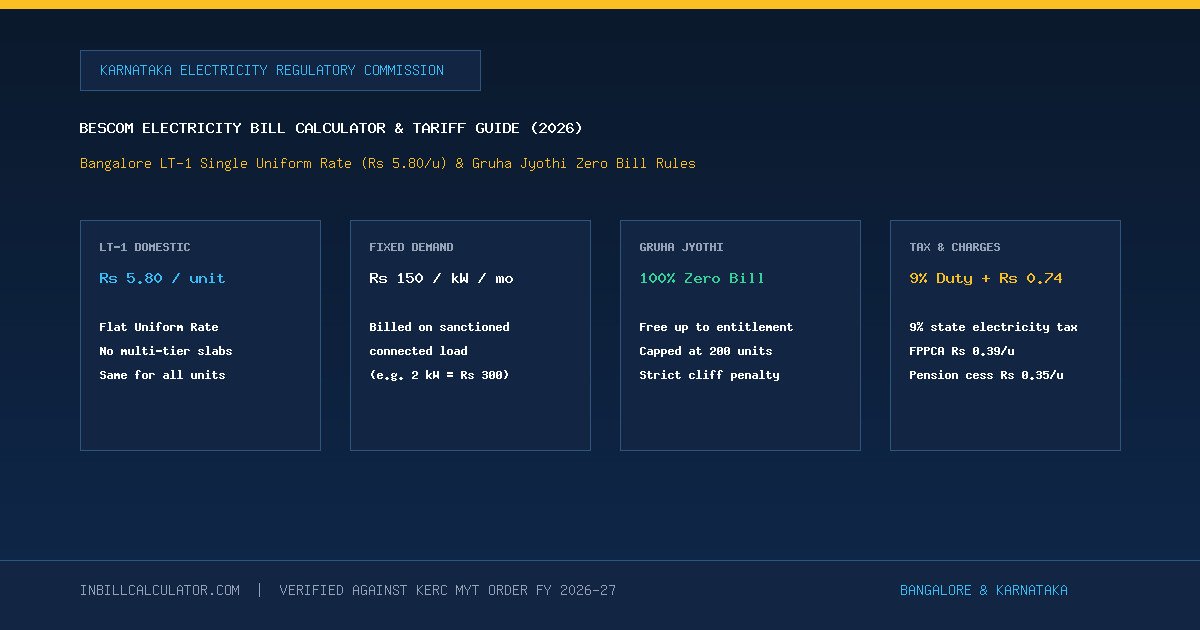
Base Domestic LT-IA: ₹5.80 / unit
Unified slab structure with FAC quarterly variation
₹150 / kW / month
Sanctioned connected load
Gruha Jyothi Scheme
Up to 200 units free power
Estimate Bill →
MSEDCL / Mahavitaran
Maharashtra
MERC Case No. 75 of 2025
Eff: 01 Apr 2026 (MYT Revised)
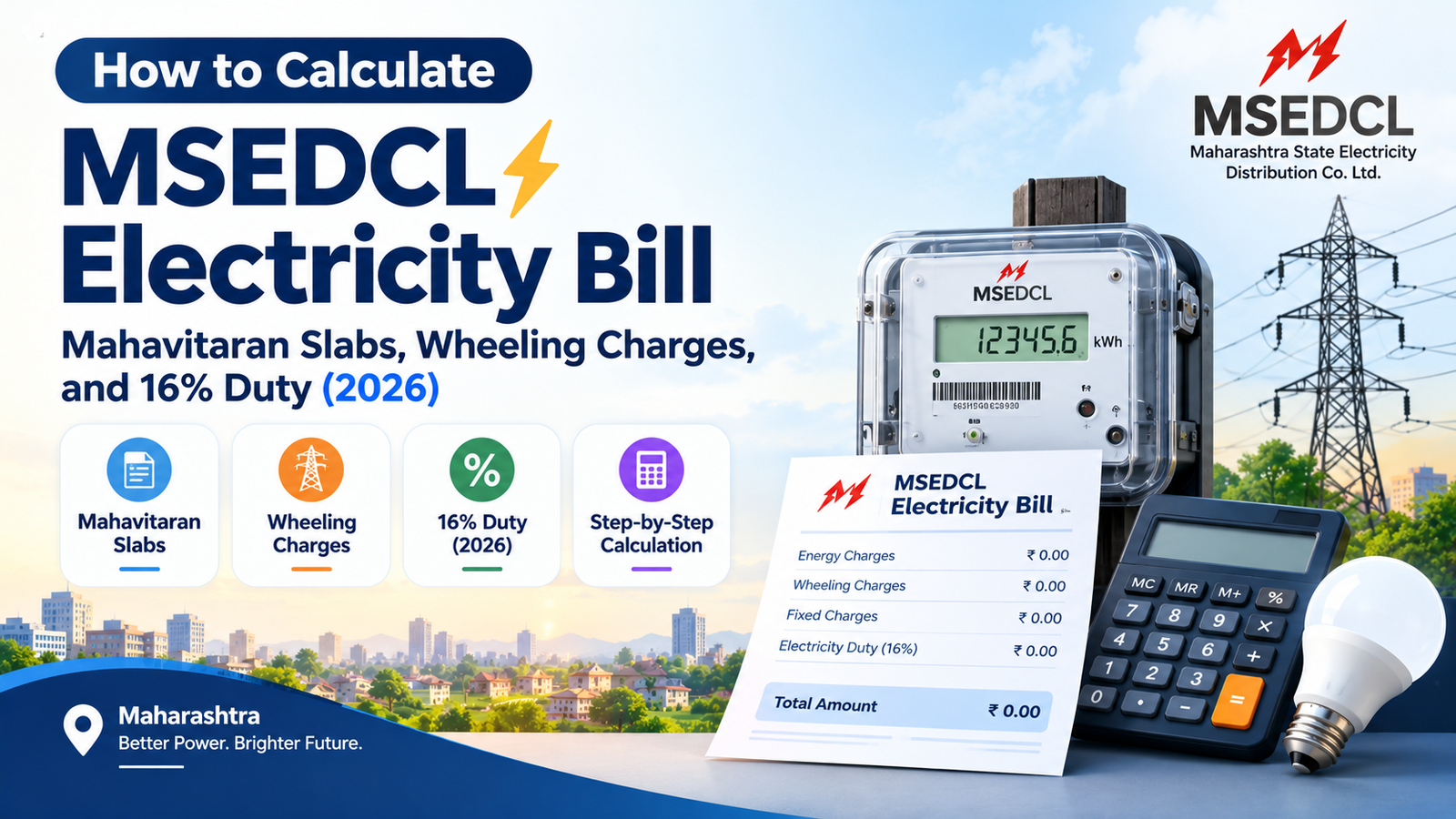
0–100: ₹3.96 | 101–300: ₹10.80
301–500: ₹15.03 | >500: ₹17.53
+ Flat Wheeling Charge ₹1.60/unit
1-Phase: ₹130/mo
3-Phase: ₹435/mo
BPL ≤30 Units
Lifeline rate ₹1.48/unit
Estimate Bill →
UPPCL
Uttar Pradesh (Urban & Rural)
UPERC Tariff Order FY 2026-27
Eff: 02 Jul 2026
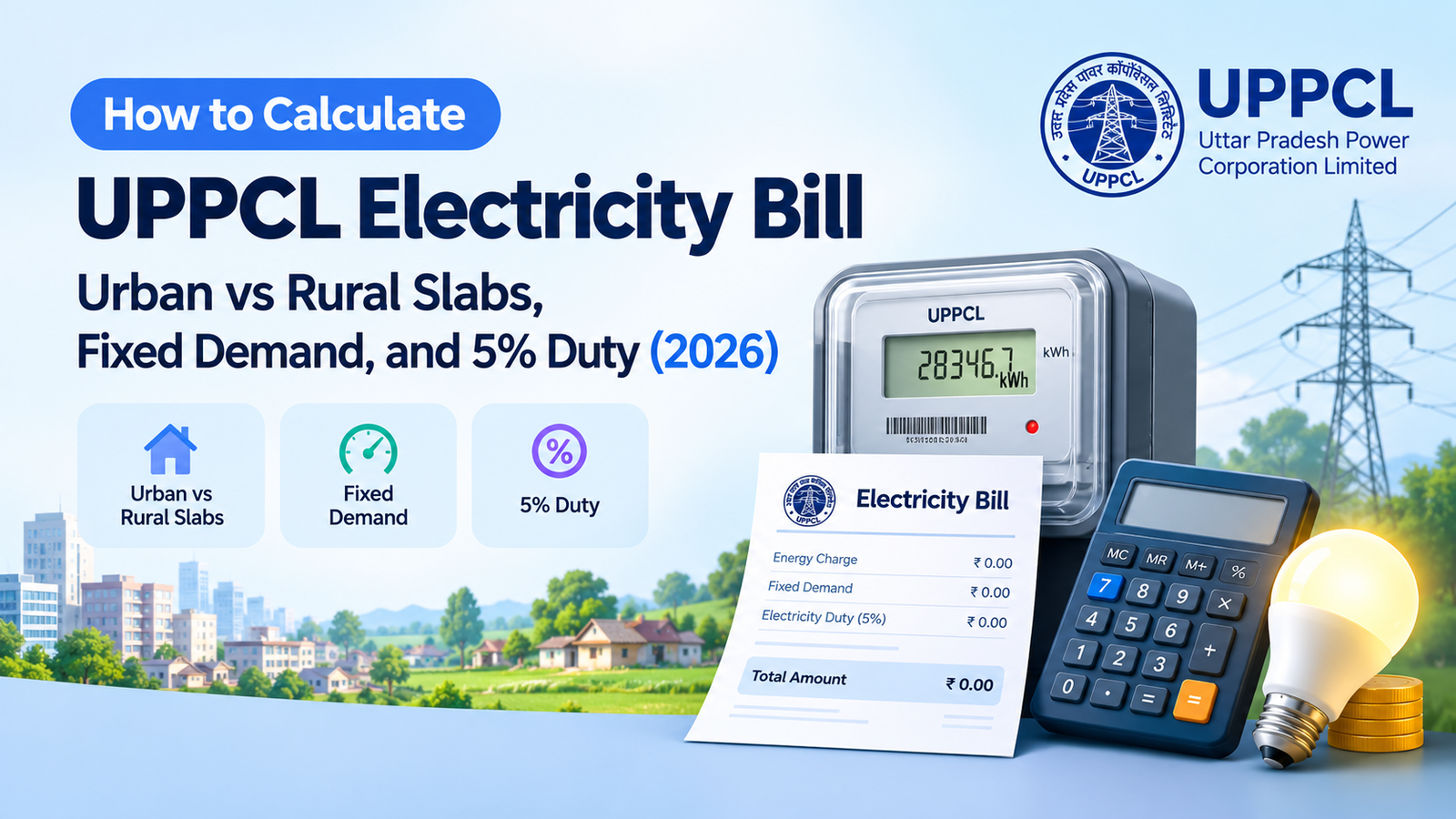
Urban: 0–150 @ ₹5.50, 151–300 @ ₹6.00, 301–500 @ ₹6.50, >500 @ ₹7.00
Rural: 0–100 @ ₹3.35, 101–150 @ ₹3.85, 151–300 @ ₹5.00
Urban: ₹110 / kW / mo
Rural: ₹90 / kW / mo
LMV-1(a) BPL
≤100 units @ ₹3.00/unit
Estimate Bill →
PSPCL
Punjab
PSERC Petition No. 61 of 2025
Eff: 01 Apr 2026
Base Domestic (Load ≤ 2 kW): 0–300 @ ₹3.85, >300 @ ₹7.05
Load >2 to 7 kW: 0–300 @ ₹4.25, >300 @ ₹7.05
₹50 to ₹110 / kW / mo
Based on sanctioned kW
300 Units / Month Free
Punjab Govt 100% Subsidy
Estimate Bill →
BSES Delhi / BYPL / BRPL
Delhi (NCT)
DERC Retail Schedule 2026
Eff: 01 Jan 2026
0–200: ₹3.00 | 201–400: ₹4.50
401–800: ₹6.50 | 801–1200: ₹7.00 | >1200: ₹8.00
≤2 kW: ₹20/kW
2–5 kW: ₹50/kW | >5 kW: ₹100/kW
0–200 Units 100% Free
201–400 units: 50% Subsidy (₹800 max)
Estimate Bill →
TGSPDCL / TSSPDCL
Telangana (Hyderabad)
TGERC Retail Order 2025-27
Eff: 01 May 2025
Group A (≤100): 0–50 @ ₹1.95, 51–100 @ ₹3.10
Group B (101–200): 0–100 @ ₹3.40, 101–200 @ ₹4.80
Group C (>200): 0–200 @ ₹5.10, 201–300 @ ₹7.70, >300 up to ₹10.00
Fixed: ₹10/kW/mo
+ Customer charges ₹40 to ₹160/mo
Gruha Jyothi Telangana
Up to 200 units lifeline relief
Estimate Bill →
WBSEDCL
West Bengal
WBERC Order Case TP-98/22-23
Eff: 01 Apr 2025
Quarterly Slabs: 0–102 @ ₹5.04, 103–180 @ ₹6.33, 181–300 @ ₹7.12
301–600: ₹7.52 | 601–900: ₹7.69 | >900: ₹9.22
₹30 / kVA / month
(₹90/kVA quarterly) + Meter ₹10/mo
Hasir Alo Lifeline
Free power ≤ 75 units/quarter
Estimate Bill →
APDCL
Assam
AERC Order Petition 20/2025
Eff: 01 Apr 2026
Domestic-A (<5 kW): 0–120 @ ₹4.25, 121–240 @ ₹6.30, 241–300 @ ₹7.20
301–500 @ ₹7.40 | >500 @ ₹8.19
₹70 / kW / month
Sanctioned connected load
Jeevan Dhara Lifeline
≤45 units @ ₹3.35/unit
Estimate Bill →

Tamil Nadu (TNEB / TANGEDCO)

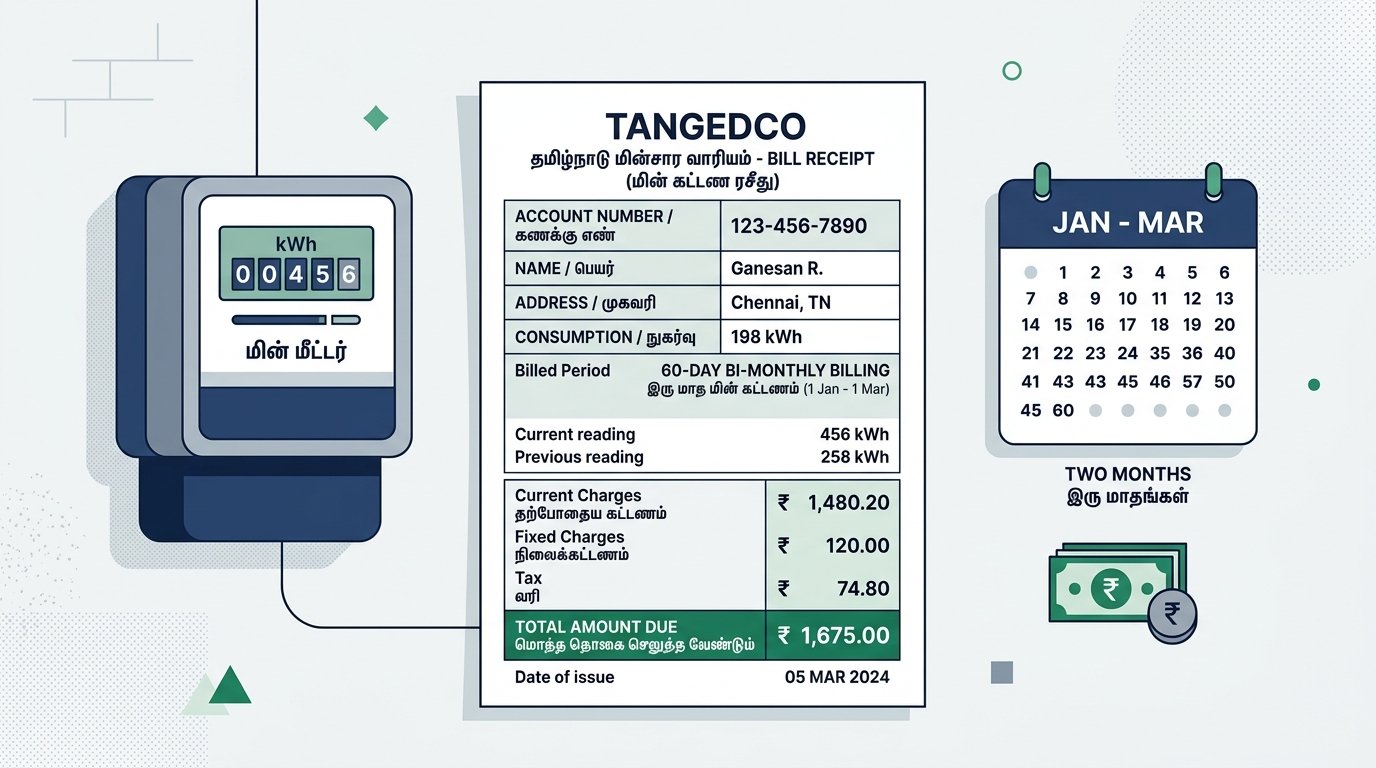
Tamil Nadu follows bi-monthly billing under TNERC Order No. 6. Domestic consumers receive 200 free units if bi-monthly usage is ≤ 500 units (saving ₹990), or 100 free units if usage exceeds 500 units. Base slabs are ₹4.95 (0–400u), ₹6.65 (401–500u), ₹8.80 (501–600u), and up to ₹12.15 (>600u). Fixed meter charges remain completely exempt for residential users.

Order: TNERC No. 6 Calculate TNEB →

Karnataka (BESCOM / KERC)

Under the KERC Multi-Year Tariff Order, domestic LT-IA consumers in Karnataka have a simplified single-tier energy rate of ₹5.80 per unit, alongside monthly fixed charges of ₹150 per kW. Under the flagship Gruha Jyothi Scheme, eligible domestic households consuming up to their entitled quota (up to 200 units) receive 100% free electricity.

Order: KERC MYT 2026 Calculate BESCOM →

Maharashtra (MSEDCL / Mahavitaran)

MERC mandates strict telescopic slabs for residential power. Units 0–100 are charged at ₹3.96, units 101–300 jump to ₹10.80, and units above 500 reach ₹17.53 per unit. In addition to base energy charges, single-phase meters carry ₹130/month (three-phase ₹435/month) fixed charges plus a flat wheeling charge of ₹1.60/unit, and 16% electricity duty is levied on net energy plus fuel adjustment charges.

Order: MERC Case 75/2025 Calculate MSEDCL →

Delhi (BSES BRPL, BYPL & TPDDL)

Delhi domestic consumers benefit from DERC regulated slabs starting at ₹3.00 (0–200 units) and ₹4.50 (201–400 units). Under the Delhi Government Power Subsidy Scheme, residential consumers using up to 200 units pay zero bill (100% subsidy), while those consuming 201–400 units receive a 50% subsidy up to a maximum cap of ₹800.

Order: DERC Tariff 2026 Calculate BSES →

Punjab (PSPCL / PSERC)

Under PSERC Petition 61, base residential domestic rates start at ₹3.85/unit for the initial 300 units (for connections ≤ 2 kW) and ₹7.05 for units above 300. The Government of Punjab provides 300 units of free electricity per month (600 units on bi-monthly bills) to domestic consumers meeting state subsidy norms.

Order: PSERC 2026-27/61 Calculate PSPCL →

Kerala (KSEB / KSERC)

Kerala operates a hybrid telescopic model. For consumers using up to 250 units monthly, telescopic slabs apply from ₹3.35 (0–50) to ₹8.50 (201–250). However, once consumption exceeds 250 units, non-telescopic flat rates apply to the entire consumption from ₹6.75 to ₹9.20 per unit. BPL households using ≤ 40 units enjoy ₹1.50/unit lifeline power.

Order: KSERC O.P. 18/2023 Calculate KSEB →
Transparent Methodology

How Electricity Bills Are Calculated in India

Unlike fixed-rate utilities, Indian DISCOMs compute power charges based on multi-component regulated tariff orders.

⚡

How Electricity Bill is Calculated in India (Official Formula)

An Indian electricity bill is calculated as: Total Net Bill = (Units Consumed × Progressive Slab Rates) + Fixed Demand Charges + Electricity Duty/Tax (5%–16%) + FPPPA/Fuel Surcharge − Eligible Subsidies.

1. Energy Charges Units partitioned by telescopic slabs at escalating rates.
2. Fixed / Demand Charges Monthly connected capacity fee based on sanctioned load (per kW).
3. Taxes & Adjustments State government duty percentage plus quarterly fuel rate adjustment (FPPPA).
1

Telescopic Slabs

Units consumed are split across progressive slab tiers, rewarding lower consumption with subsidized baseline rates.

2

Fixed & Demand Charges

Mandatory monthly or bi-monthly connection fees assessed on sanctioned load (kW/kVA) regardless of usage.

3

Electricity Duty & Tax

Statutory state taxes (5% to 16%), regulatory surcharges, and local municipal power cess.

4

Government Subsidies

Free lifeline units (e.g. Tamil Nadu 200u free, Delhi subsidy, Punjab 300u) automatically credited before final net bill.

Help & Knowledge

Frequently Asked Questions

In India, your monthly electricity bill consists of five primary components: base energy charges calculated using state telescopic or flat consumption slabs, fixed or demand charges based on your sanctioned connected load (per kW), wheeling and transmission charges, state electricity duty and taxes (typically 5% to 16% depending on the state), and monthly fuel surcharge adjustments (FPPPA/FAC). Any eligible government lifeline subsidies (such as free unit quotas) are deducted from the gross amount to arrive at your net payable bill.
Under telescopic tariff slabs (used by states like Maharashtra, Tamil Nadu, and Karnataka), your consumption is divided into successive blocks (e.g., first 100 units at a lower rate, next 100 units at a higher rate). In non-telescopic slabs (used by Kerala for high consumption), crossing a consumption threshold recalculates all consumed units from unit 1 at the higher slab rate, causing a sharp bill increase.
Electricity distribution is regulated at the state level by State Electricity Regulatory Commissions (SERCs) rather than the central government. Power generation mix (thermal, hydro, solar), power purchase agreement costs, distribution infrastructure losses (AT&C losses), and state government subsidy schemes (like Gruha Jyothi in Karnataka, 300 free units in Punjab, or Delhi DERC subsidy) differ significantly by state and DISCOM.
Fixed or demand charges represent the recurring infrastructure cost of maintaining power grid availability to your property regardless of actual energy consumed. They are billed monthly or bi-monthly based on your sanctioned connected load in kilowatts (kW) or kilovolt-amperes (kVA). For example, a 2 kW domestic connection with a fixed charge of ₹50/kW incurs ₹100 per month in fixed charges even with zero units consumed.
The PM Surya Ghar scheme provides a central government capital subsidy of up to ₹78,000 for installing grid-tied residential rooftop solar systems (up to 3 kW). Generated solar energy is fed through a bi-directional net meter. On sunny months, your rooftop system can offset your entire daytime electricity consumption, effectively reducing your monthly power bill to only the minimum fixed demand charges.
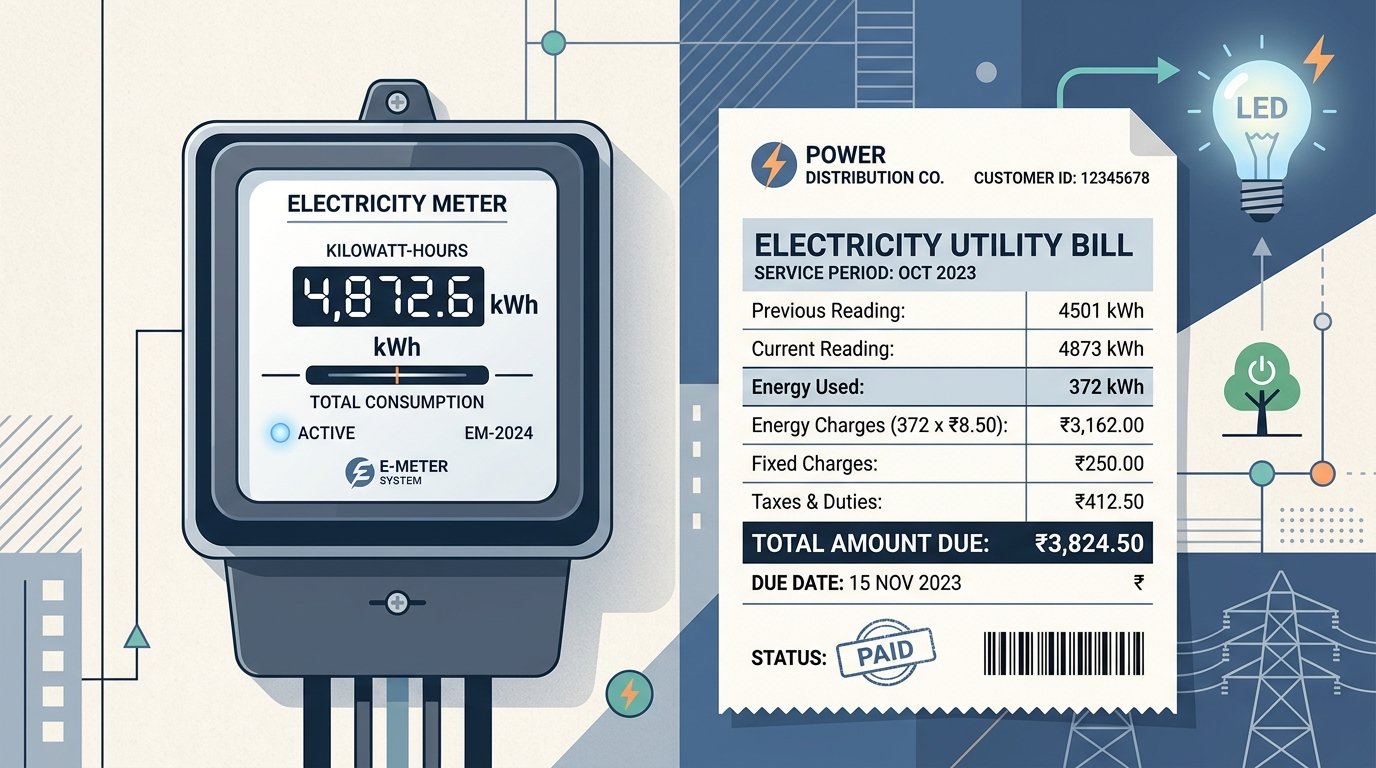
To calculate units consumed for your billing period, take your current meter reading in kWh (kilowatt-hours) displayed on your digital or smart meter, and subtract the previous meter reading recorded on your last electricity bill. The difference equals your net units consumed (1 kWh = 1 unit of electricity). If your utility uses a Power Factor (PF) or Multiplier Factor (MF) for commercial connections, multiply the difference by the designated factor.